Thursday, March 31, 2011

Ramona Epic #8: Ramona Catches Margarita

In this video, Ramona catches one of the other girls at the ranch flirting with Alessandro. The significance is that Ramona ends up being somewhat hypocritical here.

Check RamonaEpic Youtube Channel

At this point, we are still just getting started with the story. The characters will start finding out dramatic things about each other very soon.

Sunday, March 20, 2011

Ramona Epic #7: Rancho Camulos (Part 2)

(GPS: N34° 24.290 W118° 45.400)

AKA The Oldest Movie Location

This is the second part of my visit to Rancho Camulos. In this blog I will spend a little more time on the fiction involved here. As I mentioned last time Helen Hunt Jackson spent a few hours talking to some of the family members that lived here. From the way she describes the rancho in Ramona it has made many people believe that this rancho is what she had in mind for her novel. So, it is considered the "Home of Ramona."
In 1910, D.W. Griffith filmed his Ramona movie here. Mary Pickford played the part of Ramona. In the following picture Alessandro tries to talk to Ramona only to be chased off by Senora Moreno. They filmed this at the south veranda of Rancho Camulos. The window to the right is supposed to be the window to Ramona's room; that's what the fictional history says at Rancho Camulos.

In the above picture, if you head staight forward you encounter where Felipe would have been resting at the beginning of the novel. A lot of the dialogue would have happened around here. The priest's room would be the door on the other side. This is the fountain and the chapel. I mentioned Ysabel del Valle in my last blog. She was very religious. Since living out here would be too far away from attending mass or church services she had this chapel built out here. Priests would come here and stay. Ysabel also had daily prayers anyone could be apart of. In the 1910 movie, the chapel is where Alessandro is introduced to Ramona here by Felipe. Here Ramona (Mary Pickford) watches as Alessandro and Felipe walk away. The chapel 100 years later! The inside. After the Northridge quake many items were stolen from the chapel. The following is the walnut tree. Unfortunately, it died some years back. It was said to be around 150 years old. Many old pictures were taken of it. This wraps up my time at Rancho Camulos. A lot more could be said and shown here. Near the end of the year as I start to finish up this series I will be coming back here one more time. Another reason I wanted to come here and do this series was I knew I would be able to get to the oldest movie location I will probably ever experience. At this point I can't imagine finding anything earlier than 1910, so this is probably it.

Ramona Epic #7: Rancho Camulos (Youtube Version)

A few links:

Rancho Camulos (Wikipedia Article)

Rancho Camulos: a comprehensive history(Santa Clarita Valley site)

Rancho Camulos (Official Site)

Saturday, March 19, 2011

Ramona Epic #7: Rancho Camulos (Part 1)

(GPS: N34° 24.400 W118° 45.420)

There are two places that are usually thought to have influenced Helen Hunt Jackson as the rancho setting for Ramona. Rancho Camulos has been the more popular and traveled to rancho as the "Home of Ramona." In this blog I will give more of the real history to the place and in the next one spend a little more time on the fictional history.

Rancho Camulos is located in Piru, Ca off HWY 126. It is just east of Six Flags Magic Mountain which is near Castaic, Newhall, and Santa Clarita. The day I decided to go was not a clear sunny day. That was somewhat unfortunate, but I had already planned way ahead to go on the day I did. Had it rained on that day the museum would have been closed.

Rancho Camulos is an active ranch where you can buy fruits and vegetables right out in front. To enter the museum grounds you do need to take one of the docent led tours. I got there right before 1pm on a Sunday and took the docent led tour. It was very good and I highly recommend you do too if you can ever visit here.

This is the front. HWY 126 would just be off to the right side of me.
One of the first things you see inside the museum is the winery. You will notice it has been stabilized. When the Northride earthquake of 1994 struck many of the historic buildings were damaged. Family members and others with historical interest decided something must be done to preserve the remains. That is when restoration was started. In the year 2000, the ranch was made a historical landmark.
In the above picture, one just goes along the side of the winery as you can see, then take a left, and then a right to reach the main U shaped structure of the adobe for Rancho Camulos.
The land was originally part of the San Fernando Mission. In 1839, during the Mexican period of California history, Antonio del Valle received the land as part of a land grant for his military service. Unfortunately for him, he died a few years after this and his family inherited the land. His son, Ygnacio del Valle, inherited Rancho Camulos and is credited for building the adobe.

These next three pictures show you the U shape of the adobe. On the right of the next picture is where the cooking and laundry took place.
The middle section.
The southern portion of the adobe. In the next blog I will cover the southern veranda just on the other side which is what most people that know of the connection with Ramona will identify the story with.
This is the inside of the middle section I showed above. It is interesting to note that each of these doors lead to separate rooms. In order to visit someone else in another room you would have to enter from the outside since there are no passage ways from the inside.
Up until the early 1860's, the rancho was used for raising cattle. Then a drought occurred that bankrupted many cattlemen in the area. It was at that time that the rancho transitioned into growing agricultural products where everything from olives and grapes for wine and brandy, to chili peppers, appricots, figs, corn, oranges, and almonds to name a few of the things that were grown here. You name it they grew it.

Ygnacio was over the age of 40 when he married a 15 year old Ysabel. Keep in mind that was common for the time period. Ysabel inherited the property when Ygnacio died in 1880. I will mention Ysabel again in the next blog, but it was during 1881 that Helen Hunt Jackon visited the Rancho for a few hours. She did not meet Ysabel, but talked to the del Valle children instead.

Later on in the 1920's, August and Mary Rubel family purchased the rancho. August Rubel was wealthy and educated. He served in WWI and WWII. Unfortunately, he was killed by a German land mine while driving an ambulance in Tunesia. Rubel family members are still connected with the rancho and are credited as helping to create the museum for the public today.

All of the above people have fascinating stories of their own. Much could be said of each of them. While a few of the above people will be mentioned again in the next blog as I continue this I want to transition more into the fictional history as I show the southern veranda.

Thursday, March 17, 2011

Jack Palance at the Best Western in Lone Pine

Early on in the remake of the movie High Sierra, I Died a Thousand Times, Jack Palance walks in front of the Best Western Hotel in Lone Pine. I've stayed here a few times. I am not sure the trees are the same as the ones you see above in 1955, but they are close to the same place. I recently went back to the Alabama Hills. Part of my quest this time around was to do new updated videos of a lot of the "classic videos" I had done before. I had not been on Movie Rd. in quite sometime. So there was some "good news" and "bad news" about this trip. Let me give you some of what I considered the "bad" part of it.

This trip had been postponed for quite a while. I had wanted to be there last year about this time, but it did not work out. Then I wanted to do this about a month ago. Well, it turned that my only chance of doing this trip was to go "there and back again" within 24 hours. I did get parts of two days to do this since I stayed overnight, but I knew I would have to rush a bit to get a lot of what I wanted done.

The weather conditions were okay, but not great. A little too warm and cloudy. I can handle it being warm, but if the clouds are blocking out some of the mountain features it can mess things up. Don't get me wrong, clouds can create really good photo opportunities to get that Ansel Adams shot. However, when I am trying to show where some scenes from a movie took place and Mt. Whitney is completely blocked it just does not work very well.

The bugs! What the heck were those things?! They were not mosquitoes, but boy were they swarming me out there. These small things were flying all over me. No bites or anything like that, but I have never encountered bugs like this out there before.

There were lots of people there. I have never seen this many people out in the hills before. I had a couple of areas that I wanted to video and people had parked right in my way. Although I did talk to a bunch of friendly people out there, this was the first time I felt that there were some "shady" people in the Hills and in Lone Pine. Like people eyeing what was in my truck when I was parked in town. Reading the Whitney Portal forum here at home I see some of what I was thinking was justified. Even with a quick stop in Red Rock Canyon while walking back to the truck there were some people doing the same thing and then took off. Very odd!

The sad thing is at the end of the day I started looking at the clips of what I had done on my laptop and realized one of the settings on the video cam were not right! Oh no!

Alright, the "good" news side. On the second day, which ended up being most of the morning, I did get back to almost every area with my cam settings right this time. The weather conditions were slightly better. It is going to take me some time to decide this, but I think most of the footage I took will work well. The video of one of the things I did I almost shot it perfectly, but I think it may have been to early in the morning for it. No big deal though, I will just go back at some other time later in the day and get it right.

What was great was right before I was leaving I was able to see a rock formation from a rare movie that I was wondering about. I had the right idea about where it should be, but could not place it. Then seeing it from the distance confirmed my intuition about where it should be. It is one of those I will have to go back to and hike into it. One of the techniques I always tell people to do is that it is important to take pictures of every area and direction so that you can analyze some of these places from home. I took pictures of it from the distance. When I have time I will go over it and prepare for next time I can visit. So, I intend to get back to posting more videos taken in the Alabama Hills. It will not be something I will do right away though.

Monday, March 07, 2011

The Snowslide of March 7, 1911 (100 Year Aniversary)

(GPS: N38° 03.260 W119° 10.485)

AKA Nature Does Not Play By Rules

The time has come. This is one I have waited some years to post about going back to the beginning of the blog. In fact, I remember thinking a few years ago that March 7, 2011 was so far away. Well, here it is. This is the anniversary of a tragic event that happened on the night of March 7, 1911.

The people of Lundy Canyon were busy mining and safe most of the year. The big problem they always had was during the winter they were vulnerable to avalanches. While we often talk about the violence in these old mining towns because of what you see in westerns, but those isolated events tended to be rare and a temporary concern compared to other environmental factors that could wipe out a whole town.

At around 12:01 AM on March 7, 1911 a series of snowslide avalanches struck near the entrance to Lundy Canyon and in Lundy Canyon as well. The most violent damage took place at the Jordan hydroelectric station. At the time it was constructed it was thought the station and the two concrete living quarters were far enough away from the nearby mountains that it was safe from the avalanches. The Lundy Canyon area had been the victim of previous avalanches, so it was well known that this could happen. It turned out that much snow had built up during the winter.

In the distance you can see the modern Jordan plant. The older plant was just to the right and Copper Mountain is further to the right slightly out of picture. The main destructive avalanche came down from the Copper Mountain and wiped out the concrete facility and homes.
From the above picture I just turned around to show you the cemetery built for this tragedy. We hiked out here from HWY 395. Most of the people buried here are from the Jordan avalanche.
The first graveside is dedicated to H.M. Wier. He was an electrician from Pasadena, CA.
D.O. Knowlton. This is the one gravesite where of a person who was killed in the avalanche in Lundy Canyon and not at the Jordan avalanche.
You will notice that during the summer it is nice and warm here for the guardians.
R.H. Mason. His wife actually survived being entombed for 60 hours before she was rescued. It is said that the family dog kept her warm.
Patrick Stromblad. There are two markers here with different spellings of his last name. At the time of his video I assumed the right marker was added with corrections, but now I am not sure about that. I will list a link below that talks about him.
There are a few more markers. In the video I briefly cover them all and probably butcher a name or two, but you will get the point. This is with my back to the cemetery gate from the other side.
I do not talk about this too much, but there are usually a few deaths each year in the High Sierra. Normally, this happens when people underestimate the snow conditions, but tragic events like this can happen at any time. Even for those with experience in the backcountry.
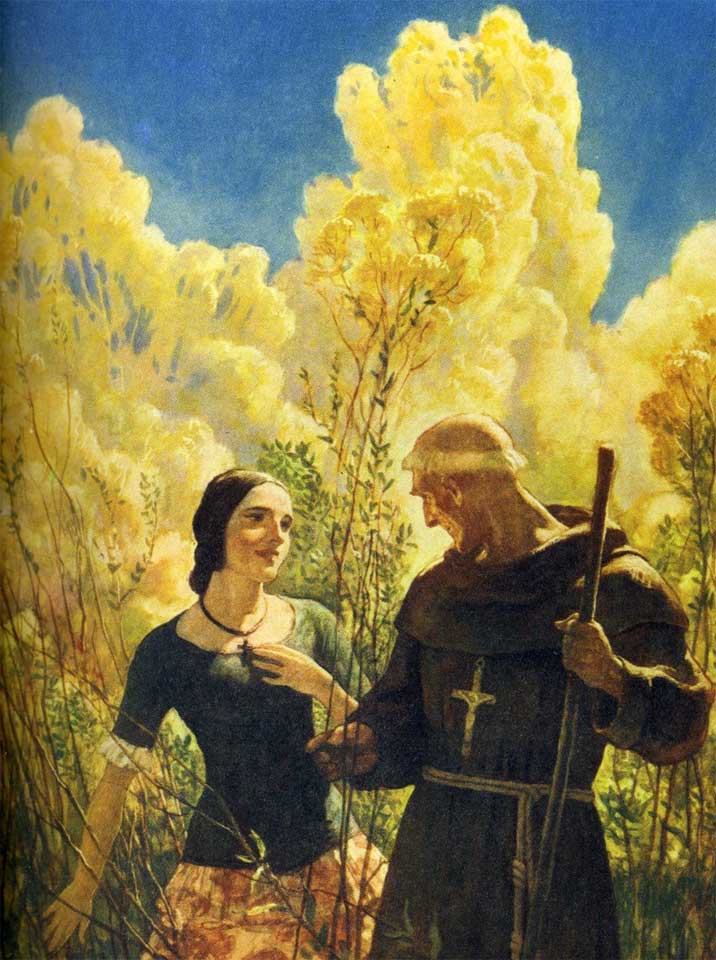
Part of why I like being in the backcountry is because, in one sense, there are no rules. Some people who I have experienced in the big city love to talk about their accomplishments, but if you take them out their comfort zone they would be humbled very quickly. The mountains and wilderness can be a very beautiful place, but one where humility can come and with tragic results. I usually feel safe when I go out in the backcountry, but have had my share of falls and other minor mistakes. So far so good, but all it takes is that one big mistake.

So no matter where you are, keep these things in mind. The video:

A few links:


Sunday, February 27, 2011

Ramona Epic #6: Father Salvierderra Leaves the Rancho

Father Salvierderra is important as a kind fatherly figure to Ramona and the rest at the ranch, but also as the religious authority. He is about eighty in the story, and he travels by foot to the rancho from the mission in Santa Barbara. At the rancho he has his own room where he stays and performs his priestly duties. He is held in high regard by all the characters in the story. From the book, when Ramona first sees him coming to the rancho:

"Ay, Ramona, I am tired," he replied. "Old age is conquering me. It
will not be many times more that I shall see this place."

"Oh, do not say that, Father," cried Ramona; "you can ride, when it
tires you too much to walk. The Senora said, only the other day,
that she wished you would let her give you a horse; that it was not
right for you to take these long journeys on foot. You know we
have hundreds of horses. It is nothing, one horse," she added,
seeing the Father slowly shake his head.

"No;" he said, "it is not that. I could not refuse anything at the
hands of the Senora. But it was the rule of our order to go on foot.
We must deny the flesh. Look at our beloved master in this land,
Father Junipero, when he was past eighty, walking from San Diego
to Monterey, and all the while a running ulcer in one of his legs,
for which most men would have taken to a bed, to be healed. It is a
sinful fashion that is coming in, for monks to take their ease doing
God's work. I can no longer walk swiftly, but I must walk all the
more diligently."


While he eventually leaves the rancho and is no longer an active character in the story, his influence is still felt as various characters refer to him and what they think he would say about their situations.

In the play he gives a few final blessings and leaves. It is the final time we see him in the play. The video gives you an idea of how natural surroundings are used as part of the performance:

Check RamonaEpic Youtube channel.

There are two historic ranchos that many think Helen Hunt Jackson based her story around. When I come back to this in a few weeks I will show you one of them.

Monday, February 14, 2011

Ramona Epic #5: You Are Going to Stay and Help Us?

Happy Valentine's Day! This is the first time we get to see Ramona and Alessandro together.

Check RamonaEpic Youtube channel

In the book, Alessandro's violin was stuck in Temecula. So, he had it brought to him. The distance from Temecula to the rancho will come up in a later blog or two. It is not that important to the story, but it is a minor issue regarding which location is where. It will make sense later.

Sunday, February 06, 2011

The Return to Lago

As I was mentioning on Twitter last week, I can usually tell when certain movies have played on television. Whenever High Plains Drifter comes on this blog constantly gets hit. I think I have seen every search varation of "Where was High Plains Drifter filmed?"

This will be the third time I have discussed this locaton on this blog. I did not mean for it to be like this, but it has turned out to be an important place for a lot readers. I will link everything I have done below in the past here, but unless I find out something new this blog should wrap it up for good.

In fact, the only reason I am doing a new blog on this area is that the conditions were really different. Although I was the guide for this place that day, I had no control over the order of the areas we visited. I would have preferred to come here first with clear morning skies because this just happened to be the same day as what I showed in December. We visited another place to the south, and then we returned here. I was kind of disappointed because I had hoped to have clear blue skies for the video.

Then looking on the "bright" side of things I thought gloomy pictures of where Lago was in High Plains Drifter might actually turn out to be a good thing for the blog. This is looking to the west:
The following is at the beginning of where the town of Lago was in the movie. The set buildings would have been on both sides.
At the end of the town I turned around and looked back. The conditions started to lighten up at this point.
We then visited the lake. A bunch of seagulls were down there and what I call the "viking ship" in the distance.
Back in early December there was a lot of excitement over newly discovered "arsenic based life" here. Like I thought might happen when the hype was over with, a bunch of people examined the research and started poking holes in it. Until some show otherwise, it appears that it maybe back to the drawing board on this one. Or, more appropriate, keep searching.

Since it was important to me to have better conditions for the video I did come back a few days later. I will go ahead and link the video and other related links below:


The Return to Lago (Youtube Version)

High Plains Drifter at Mono Lake (All three blogs on this area, including this one)

Clint Spooks 'Em (Youtube Version)

Clint Spooks 'Em (My blog on the other HPD location nearby)

Regarding what I wrote up on the "alien life discovery" in December.

You can also check any of the labels on the right side that deal with Mono Lake and any other nearby area. I have often pointed out this area from up above elsewhere.

Tuesday, February 01, 2011

Mono Mills

(GPS: N37 53.275 W118 57.650)

Today I am going to cover a quick stop one can make south of Mono Lake on Route 120 on the way to Benton. What this blog should do is make a few connections with what I did in December and a few future blogs I will do this year. This is another one where there is very little left of what once was.

The problem that the town of Bodie and a few of the others had was they were a little too far away from the trees found more to the west on the high mountains. They had to find a way to get lumber for building and for fuel. While there were a few others that brought lumber into these towns, it was Mono Mills that was the answer during their existence.

While driving along the 120 there is a monument just off the road to look at. You can click or right click open in a new window the following pictures to read them if you need to:

At the kiosk that stands over the site they have a bunch of signs:

This is looking down on the what little remains of the mill area. You can barely see a tiny part of the Mono Lake in the background.
So, what they did was build a train track from the mills through the east side of Mono Lake to Bodie. Some more of the debris:
This is from the mills looking west. I just wanted to show that trees that grow here.
The area is a little odd for tree growth. What you see above seems normal for an area like this. If you have seen High Plains Drifter, then you may remember the scene where the outlaws get out of prison. That area is just to the west of here. It has a sandy white dirt look to it, yet some trees grow out there.
In the above picture you can see little tiny trees just starting to grow. I am not going to post the other picture I have, but if I were to turn around to other side of the road you would see a few full grown trees like that.

A Quick Stop at Mono Mills (Youtube Version)

Friday, January 28, 2011

Ramona Epic #4: Felipe is Sick, But...

January has been a month of laying down the foundation for everything on this blog for this year. I have to do one more of these, and from here on out I think things will be a little easier going and not as word intense as the last couple this month have been. I will start with the play story and then talk about the play below.

Our story starts at the Rancho during a time the local Indians have come to help with the sheep-shearing. Senora Morena talks about the condition of her son Felipe at the Rancho. She meets with Father Salvierderra and some of her concerns come out.


The play was started in Hemet in 1923. It is the longest running play in the United States and the official state play of California. Only two years were taken off due to the Depression (1933) and World War 2 (1942). It runs outdoors in a bowl on a hillside. One can see the play on the weekends at the end of April and early in May.

It is privately funded. The only paid roles are the two lead roles of Ramona and Alessandro. The rest of the cast is made up of locals around the area of Hemet. Some famous people have began their careers with this play. For example, actor Victor Jory and actress Rachael (Tejada) Welch.

I set up the RamonaEpic account on youtube for all my Ramona videos. 

You will only see short clips of the play. Some very short and some a little longer than others, but not the entire play. Just enough to let you know what it is like, and hopefully inspire you to see it if you are every in Southern California at the end of April or beginning of May. Of course, I will be showing pictures too along the way.

At this point I am going to transition into something else for the next few weeks and then I will come back to Ramona sometime this next month. This is probably how the rest of the year will go where I spend time on Ramona every few weeks, then do something else on the blog, and then go back to Ramona.

Wednesday, January 26, 2011

Ramona Epic #3: San Gabriel Mission

(GPS: N34 05.820 W118 06.375)

In this blog entry, I am going to try to kill three or four birds with one stone. Originally, this blog was supposed to be connected to the last one. After thinking things through on this I decided I had better split them up or I would make both the blog and video too long. So, this will be another of the foundational background blog entries.

A year ago, this was the first mission of the four I had gone to for this blog. I have covered two already and will link them below if you have not seen them. When I went to this one I took many pictures and took lots of video. At that time I had not done any Ramona stuff yet, nor had I gone to the other missions. I had this idea I was going to be really detailed in covering this one.

That was then, and this is now. I am a bit "missioned" out right now. While not every mission has the exact same structure, I am kind of to the point I feel I do not want to waste as much bandwidth on this one. This is not a cheap shot toward the San Gabriel Mission. It is an important one and I would give it pretty good marks as a museum. I am just going to hit a few highlights and let it go at that.

This will be the only mission I will cover as a connection to the Ramona series. There are a bunch mentioned in the book, including the San Luis Rey Mission which I covered back in Oct./Nov., but this is really the only one that tourists visited as a connection to the Ramona birth place.

The missions are important part of the background to the Ramona book, because the Indians in it are Mission Indians. Let's cover some of the basic history to the missions:

Spain owned California from 1769 to 1821. A series of missions were created during this time period as religious and military outposts. The goal was to convert and colonize the local Indians into the Spanish way of life. In theory, the missions belonged to the Indians and after a time the governing process was to be turned over to the Indians, but that never happened. Spain's reign ended in 1821 as Mexico gained its independence.

Mexico then owned land from 1821-1848. Originally, the missions and land were going to be kept the way it was, but a few years later the secularization of the missions began. Basically, the land was confiscated and given to private individuals. The priests could keep the church, the quarters, and priest's garden. The private individuals that received the land grants could hire out the Indians to work the land. This is what happens in the beginning of Ramona. Finally, after the U.S. war against Mexico, the land became part of the U.S. in 1848 as it is until now.

The mission that would become the San Gabriel Mission was founded in 1771, but due to a flash flood that wiped out the crops it was relocated five miles north to this location in 1776.

This is what the entrance to the church looks like. I did not go in because they did have a wedding going on. For our purposes, like I mentioned in the last blog, this is where Ramona's dad was married in the story.
Here are the mission bells next to the church on the side of the mission. I should note here, that according to some, Ramona's dad was based on the local resident Hugo Reid of Scottish descent. He, like Helen Hunt Jackon, criticized the treatment of Indians in the mission system.
Upon entering this mission it is like a square, but the way it works out is it is like walking around a big U turn. The video covers the highlights better, but let me show a few things here. After seeing the nice fountain they have one enters the cemetery next to the church.
This is the oldest cemetery in Los Angeles. The crucifix is dedicated to the 6,000 Tongva Indians that were buried here.
In the video I show a plaque that is partly dedicated to Padre Garces. He did not die here, but did come here through the San Bernadino Mountains. Also, Mountain Man, Jedediah Smith came to this mission through that trail. After struggling through the Mojave Desert Jedediah came here with his men to rest and recover, but the concern was that they were U.S. spies. So, Jedediah was sent to San Diego to be checked up on. He was eventually told he must leave California so he took his men north and crossed back somewhere in the northern part of the Eastern Sierra. He did spend some time at this mission resting and getting healthy. I will link to the marker for Garces and Smith that I hiked to below.
The above picture is near the mission museum near the back of the mission. The big wooden doors are supposed to be the original doors to the mission. Below is a statue of Father Junipero Serra who founded the mission system. There is usually something dedicated to him at each mission. This museum has some of his original writings. At this point of the mission one crosses over and visits the other features of the mission.
At this point I am going to stop and let the video show what is over on the other side. The one thing in the museum I thought I would show is it has a picture with Ramona tourists in the 1880's. If this is the case then it means that tourists were flocking to the sites right after the book came out.
It is important to note that while Ramona was written as historical fiction, in the end, it was a propaganda piece. There are some things that she glosses over and left out from a historical perspective that would have undermined, to some degree, what she set out to do. I probably will not talk too much about this as we go on, but there is at least one site that I will go over along the way that the violence used in the novel is not related to the violence the site is remembered for.

Ramona Epic #3: San Gabriel Mission (Youtube Version)

San Gabriel Mission (Official Site)

Garces-Jedidah Smith Monument

San Diego Mission

San Luis Rey Mission

Hugo Reid (Wikipedia Article)

Saturday, January 22, 2011

Ramona Epic #2: Ramona's Birth Place

(GPS: N34 05. 860 W118 06.510)

Ramona's family origin is very clearly told to the reader in chapter 3 of the book. However, Ramona does not know her true origin at this point of the story. Here is the little section relevant to what I am going to show today:

"Finally Angus disappeared, and after a time the news came up
from Los Angeles that he was there, had gone out to the San
Gabriel Mission, and was living with the Indians. Some years later
came the still more surprising news that he had married a squaw,--
a squaw with several Indian children, -- had been legally married
by the priest in the San Gabriel Mission Church."


That is what the book states about where Ramona's father was and where he had married. A little later it mentions that an Indian messenger came from San Gabriel to bring news about Ramona's father when Ramona was just less than a year old. So, from this it was inferred that Ramona was born in San Gabriel and lived there for the first few months of her life.

San Gabriel was the first place I went to about a year ago when I came up with the idea I would do this. The book does not give very much about Ramona's actual "fictional" birthplace. This is one of those areas that was created for the tourists. Today, one can still see a few traces of the Ramona influence on the area. In the following picture, I was just outside the San Gabriel Mission looking at the traffic light. I actually used Ramona St. on the way out and drove it as far as I could back to the freeway. For our purposes, I headed to the right to get to the birth place.
The adobe building that was created for Ramona's birth place no longer exists. This is what is said to be that house according to the postcard. One could go here and purchase gifts.
Now another postcard has this.
While I am not entirely sure where the original adobe building was my guess is was very close to the left side of the postcard. I can show where the Grapevine building was and still is today:
The grapevine is said to have been planted in the early 1860's. Apparently, it covered around 10,000 square feet. I did not look inside since the gate to the Grapevine building was closed, but part of that grapevine is said to still be inside it. Today, the building structure to the left is connected to the recreation department. Another postcard has a different angle of the Grapevine structure.
In each postcard you can see something in the background that is overarching the Grapevine. That is the Mission Playhouse that still stands today:
It was used for the play that told the story of the California Missions and the people connected with them. A cast of 150 people with a 4 1/2 hour production. Today it is still used by musicians and fine art performance groups.

While many tourists did come here to see where Ramona was born. This site was never considered as important as some of the other sites I will be showing this year. In DeLyser's Ramona Memories book she only dedicates three pages to this where most of the others have about ten to twenty pages. Still, like I said above, you can see some traces of Ramona around. In the video I point out one more nearby.