First, let me preface this by saying that this has really nothing to do with the blog itself or anyone I know that reads this blog. Nor am I writing about any other blog here, but I am sure this happens on other blogs too.
I have decided I am going to take down some of the links that I have listed on the right side of the blog. Those links were put there primarily for me as a shortcut to a lot of stuff I try to keep up with. Not that they are a bad thing, but I have of burned out of a few of them. I never write about this in public, but will try to explain here.
Over the years I have noticed that many message board forums tend to gather a certain group of people. They are usually filled with the "die hards" that are really enthusiastic about whatever subject the forum is about. This is usually good because message forums often tend to be the first place new information comes out.
Certain patterns tend to take place in them though. It would be hard to categorize all the different types of characters you would get in them. Flamewarriors comes to mind. In almost every message board I have been involved in there are good and bad phases. Usually, some egos clash, frustration builds until a "war" occurs, then a period of resolution. Some may leave, but usually the cycle just starts again.
Some people have their own agendas when they write messages. I often read them and say to myself, "Okay, why was this person writing about this?" I ask that because usually there is something going on in the background that is not apparent in why they are writing their message. A person that is new to the message forum might not pick it up.
A lot of the same questions get asked over and over again. If it is an area of controvery then old debates usually start up again and again. It is a cycle after all.
Let me get to the point. It is not all the links I have listed here, but other things I follow too. Over the past month or so a lot of tension has built up on some sites I visit or receive by e-mail. It is the "war" phase. If one goes to these areas for fun after a hard day of work, then it can be really frustrating if you do not like this type of soap opera drama.
In the past year I have really backed off the amount of messages I write on open public forums. Someone may ask a question I know very well, but I decided it is best to "sit it out." I have mentioned this before in a different way a few months back, but sometimes there is a village idiot mentality out there. Meaning, some people start talking like they are experts on something when all they are doing is a few Google searches and not doing proper research on a topic. Their "knowledge" tends to be rather trivial.
I usually refer to this as the Dunning-Kruger effect which is where people that have little knowledge think they know more than do and those that think they know little know more. I have seen it happen a lot in my different areas of interest. Eventually, when I start talking about my martial arts background and bring up some of my favorite Japanese movies this will come up. There is one guy out there that has seen lots of Japanese movies, but flat out does not know what the heck he is talking about. If you try to correct him he gets bent out of shape and threatens to leave.
It seems like in my favorite areas there always is one person who is like this. They tend to post the most messages and, maybe not consciously, take over the board. The type that responds to just about every message. Soon, others stop writing messages, and the dominant personality tends to be the majority message writer. Then, after a period of time, they tend to repeat themselves over and over and it is like, "OKAY, I GET THE IDEA! FOR THE 100th TIME YOU HAVE WRITTEN THIS!"
In the next few weeks I will start taking down some of the links. If you like some of those areas you may want to make a note of them. Although I still intend to visit them at times, I do not use them as much as I used to for the above reasons.
With all that said, let me make a few notes:
1)I intended to go over my martial arts background and open my new area on my interest in Japanese Samurai movies at the beginning of this month. Unfortunately, a few days before I intended to do it my computer started to have problems where I had to wipe out my harddrive and start over. I will probably start that up in the next month or two. This will be a side issue that this blog will cover and not really replace anything that I do. If this is not something you have an interest in, then have no fear because it will not dominate this blog. I will explain when I start writing messages about it.
2)I have said this before, but let me say it again. I want this blog to have a bit of variety in how I do my blog entries. The stuff I do that a lot of you like is the movie location entries. I know this and I have tons of material to show and more areas I know about, but just a matter of getting to them. Some things I do are not as "popular" as the movie location entries, but I still like to throw them in so I do not burn out of just doing the movie locations. I have a few hiking videos I have really put off that I really want to put up. So, if you think there is a pattern here you are right. I tend to do a bunch of one type of thing and then throw in something completely different as a change of pace. That is just the way I am or I start burning out. I am going to start posting more movie locations again for the next few weeks and go from there.
Thursday, July 31, 2008
Saturday, July 26, 2008
The History of McDonald's (Part 3)
(GPS: N 34° 00.160 W 117° 56.185)
This is my last entry in this series about the history of McDonald's. This really is not so much a historical place, but it is something that still "really, really, really matters" for the franchise. So, without further ado, let me present The Mysterious McDonald's.
This is not a public McDonald's restaurant after all. Although it sure does look like one. Let me give you some intel from one of my secret agents. It will still be creepy and mysterious because it is rare to see someone there, but it might explain a few things:
 This McDonald's is in an industrial area in, naturally, the City of Industry in California. It is production area that is a fully working McDonald's, but not for the public. As you can see, it is gated so if you drive by, do not go in expecting to eat there. Stay on the street. Again, private property, drive by slowly and use your eyes.
If a movie needs a scene from a McDonald's it could be filmed here and their commercials are filmed here as well. The products used to make McDonald's food are made in the City of Industry. So, this is why this is here. Right next door over they have this: It is a training facility. Okay, so there you have it, I am sure there are more secrets that go on behind these gates, but we are not to know. That is the way of the greatest dominating worldwide fast food franchise. So, eat your cheeseburger with pride!


Saturday, July 19, 2008
The History of McDonald's (Part 2)
(GPS: n34 07.520 w117 17.665)
1398 N. "E" Street, San Bernardino, CA
Continuing the "history that really, really, really matters." This is the area where brothers Richard and Maurice McDonald started the fast food restaurant that many know and love.
Last time I covered the oldest working McDonald's and mentioned some of the history there. You can look at the links below that give you most of the important stuff involved here. The brothers had been in the restaurant business for sometime, but decided to create a restaurant with the emphasis on making quick hamburgers.
 Here is the little plaque noting the original site which is now a McDonald's museum and a historic Route 66 museum. Notice the original mascot, Speedee, on it.
 This is a picture of the original menu. Click the picture to get a bigger view of it. I think you may be amused at some of the names they gave the food compared to what we have now. "Aristocratic Hamburgers?"
 The second McDonald's was made in Phoenix, Arizona. It was the first one to use the golden arches.
 Last time, in part 1, I showed the oldest working McDonald's in Downey which was next, but also has the golden arches. Eventually, Ray Kroc visited the Downey one, liked the idea, and purchased the franchise from the McDonald brothers. Ray started his restaurant in Chicago, Illinois:
 For further information refer to these two links:
http://www.route-66.com/mcdonalds/
http://en.wikipedia.org/wiki/Dick_and_Mac_McDonald
Sunday, July 13, 2008
The History of McDonald's (Part 1)
(GPS: N 33 56.820, W 118 07.085)
10207 Lakewood Blvd (at Florence Ave) in Downey, Ca.
Here is some history that "really, really, really matters."
This is the oldest working McDonald's. It was the third McDonald's that opened in 1953. Some years later Ray Croc came here and like the idea of creating fast food like this. He bought out the name from the McDonald brothers and started the franchise we know today as McDonald's. It turns out this one ended up existing independently than the mainstream one.
 By doing so, they ended up keeping the original mascot called Speedee. There were no clowns here. At night you can see him with neon lights showing his quick feet.
 In 1990, the mainstream McDonald franchise purchased this one and it became part of the whole franchise. Click the following picture so you can read the whole history.

Friday, July 04, 2008
Mule Train Waterhole (The Alabama Hills Series)
(N36 36.385 W118 07.085)
Here is another man made artifact from the old western movie making era. This is very much like The Gunfigher Waterhole I chronicled last year.
Locations like this are not always easy to find due to the "open field" look it has. Just using the still picture below one would have a harder time finding the area unless one really already knew the area.
 Even with the picture below it is still tough to compare. My picture is lower on the ground, but if you click both pictures and look closely in the background you should be able to line up some of those rock formations. Start with the small hill in the background of the far right side. It should make sense if you then compare the rocks going left in each picture.
 In these two pictures I took, Gene would be on horse, Champion, between the two rocks just above the remains of the waterhole slightly to the right in each picture. They are not as easy to see because of the sagebrush that has grown in here and the rocks blend in with the dirt. Of course, the main reason we are here is to see is the concrete remains of the waterhole:
 One location hunting principle to note is that most movie filming is not done too far from a road. This is because to film a movie one needs to have the equipment at the location. Just about everything I show is near some road and not some backcountry area that has walking only access. As you can see in my pictures there is a road you can drive on just beyond the waterhole. I actually did drive on it to get to this location, but I have walked to here before since it is not too far from the main movie road.
 Gene is standing just above the waterhole. Now, below, you can barely see the waterhole and you probably would not know without me saying so, but you can see that little rock rock in the middle that matches the one in the above picture. After you get that little rock you can start matching up all the nearby rocks. This is one of those cases where one might see the movie picture and the picture below and not think it was the same area.
 There are a lot of movie locations in this area that are easy to find. Sometimes there are some that can be very difficult because I do not have much to work with in regards to the background and rocks nearby. If someone were to give me the above picture with Gene, told me to go find it, and that is all I had, then that would be pretty difficult. Unless I already had those rocks "burned into" my mind from my previous trips I would have little to go on.
There are lots of scenes in movies I have seen with rocks like the above and know I have walked passed them, but I can not always remember where they are. Even if I have pictures of those same areas it is not always easy to compare and identify.
Have a happy July 4th, and if you are from other parts of the world...have a happy July 4th. :)
Saturday, June 28, 2008
Climbing Stairs (The Music Box Location)
(GPS: N34 04. 985 W118 16.510)
(Edit {1/10/2010}: Just an FYI for those that randomly come in here or new readers so there isn't any confusion. Originally, I had a video up with clips from Laurel and Hardy and the Three Stooges. The point of it was to show the same type of gag used going up and down stairs. At the end of the video I showed a walk I did up the Music Box Stairs. That video was taken down a long time ago. The areas in both movies were filmed nearby, but are not the same. I have never claimed they were the same location because it is pretty obvious they aren't. The video had an annotation noting this, but it is not up anymore and I took the link to it off this blog which also mentioned this during the time. However, I just noticed I still had the tags from The Three Stooges and the name of the movie still listed on here. I just erased the tags from this entry.)
Here is a still from the Laurel and Hardy movie:
 I walked about 2.8 miles to get here from Downtown L.A. Short hikes like this do not bother me. Homeless demanding quarters out of me does not bother me either. A person exercising on the stairs for about ten minutes does not faze me at all because I can wait that out. Showing up on a day where trash cans have to be in a picture is annoying. Sometimes I have bad luck like this. Notice the house on the right is the same.
 To celebrate this movie's location it was named Music Box Steps and you can see the sign here:
 This plaque was added to one of the bottom steps. You can click it if you want to read a bigger version of the picture.
 Here we are at the bottom looking up.
 Here is how it looks these days looking down from the top.

Saturday, June 21, 2008
Bad Day at Black Rock Location Hike
(GPS: N36 38.040 W118 02.390)
(EDIT: I have taken down this video. I will put up a new one at a later time).
I was tempted to call this one Bad Days at Black Rock. This is a blog entry I wanted to do over 6 months ago. Each time I went to this location there would be a few technical problems, and the weather was not always what I had wanted in getting some video and pictures. My latest trip was not too fun either with mosquitoes trying to get as much blood out of me as possible. It was a case where I had to keep moving they were so bad. What you are going to see in this entry is a combination of three trips to this location.
Honestly, this is not the location I would take someone to if they have not seen the movie and have no interest in the area. There are much better areas to check out compared to this one. Not all locations I go to are that inspiring to go to. Still, since this movie is a classic, I am sure there are some out there that might want to see where it was filmed at.
A little about this movie, Bad Day at Black Rock is probably my favorite of the post-western or modern westerns that has been made. In many ways it is very much like a western, but since the time frame is post-WW2 it is way out of the frontier era of the old west. It is often said that the western is dead, but we do get a few westerns out as big screen movies every few years and made for tv westerns come out each year. I do think we may start seeing more of these types of modern 20th century post westerns era movies due to the success of the recent No Country for Old Men and There Will Be Blood. BTW, just as an aside, I see why people liked those movies, but I did not really care for them that much. No Country had some really good suspense in it, but after I watched both movies I felt like, “Wait, what was the point of this?”
Bad Day at Black Rock is very film nourish with the mysterious Spencer Tracy coming to the isolated town of Black Rock and being “welcomed” by equally mysterious Robert Ryan, Lee Marvin, Ernest Borgnine, and Walter Brennan. They are trying to figure out why he is there and Spencer Tracy is trying to figure out why they do not want him there. There is much more to this, but if you have not seen the movie then I suggest you DO NOT read any reviews about this online or anywhere. Just watch the dvd or see it when it comes out on cable (TCM just showed it) or your local tv station (PBS is listed as playing it). I am starting to get more and more like this, but I usually do not read many reviews online. I used to write a few myself, but sometimes people write these long rambling things and spoil some of the good stuff you should see before you read about. There are some reviews and general descriptions of the movie that spoil some of the keys to the story that you are not supposed to know until later in the movie. I found out it is best just to watch something rather than read about it since only you can decide what you really like.
In the video I show how to get there. You have to take Narrow Gauge Road just outside of the main part of town in Lone Pine. Eventually, you encounter a gate on the northern side (to your left on the other side of the road). If the gate is closed you just open, drive through it, and then close it again. I usually just park here, pass the gated area, and start walking. It is about a mile.
 Originally, there were a few real trains that traveled through here. The train and tracks used in the movie were taken down a long time ago. In the movie, don’t blink; you see the train crossing over a bridge. The following is where the bridge was at:
 There is a gas station or garage that a few crucial scenes take place at. From the movie:
 This area that I am standing at is where the garage would have been.
 I mention this in the video and wanted to mention this a little more here. It is quite possible this is rubble from that garage. I am not going to say it is or is not. I have seen too much from other locations that could have been added much later. Many things can happen over the years with people traveling and visiting certain areas and making them dump spots. On the other hand, there are locations that I have seen something like this and I am virtually certain it is from the movie set.
I think when some people visit areas like this they have this idea that something must have remained from some set some 30+ years ago. They come, and to their great disappointment there is nothing there. So, they start searching the area for traces. They might find a piece of wood, etc. and think they have found something from the set when all it is something someone threw on the ground two months earlier. In many cases it is unlikely one would find something after all these years because people were hired to take down movie pieces.
I have noticed this on documentaries on cable channels too. I have seen people go out in fields claiming a medieval battle, never before revealed to the public, took place at some location just by looking at a map. I have seen crack pot adventurers look for lost treasure in these types of documentaries. With the recent Indiana Jones movie there was a real screwball one about a guy trying to find crystal skulls. I taped it, watched it while I was out of town, and wanted my two hours back. Somewhere in it they revealed that the skull the guy owned was originally purchased through an auction and was probably fake. A lot of these documentaries like to ham it up for the audience like you might see in a “reality” show. When the facts are known you have to wonder what you can believe about them. You get the idea.
Here is probably the best shot I have looking at what would have been the main street of Bad Rock. The main town building would have been on the right side of the road.
 This is looking toward the north side. You can see where the train track would have been at one time here:
 A few tidbits about this movie:
Ernest Borgnine was acting in this movie when he auditioned for the title role for Marty. He was at the Lone Pine Dow Villa where he gave a heart breaking script reading. When he saw that the people who were auditioning him started tearing up from his emotional acting he knew he had the part.
Supposedly, Spencer Tracy and Walter Brennan did not care for each other too much during this movie. Politically, there were on different sides of the spectrum with Tracy being more liberal and Brennan being more conservative. The story is that right before a scene would be filmed Brennan liked to throw three fingers in the air at Tracy and say, “THREE!” He would time it right so that Tracy was supposed to get irritated right as they started filming. It was a way of taunting Tracy as he had two academy awards compared to the three Brennan had earned.
As I said a bunch of times in the video and here, this is not really one of my favorite areas since it is so isolated with nothing really to see. It is just like the feeling in the movie of an isolated area in the middle of nowhere apart from civilization. It is not as scenic as other nearby areas. Not every location I visit I feel is gold, but I still like to show them anyways. I do have a few other locations from this movie I will show at a later time.
Saturday, June 14, 2008
Mono Lake Crack
(GPS for Black Point: N38 01.680 W119 05.815)
Here is one I like because it has a spooky effect to it. The first minute or so is at Black Point which is not that impressive, but is to show you where I was at. A few hundred feet away is the opening to the area "Mono Crack."
If done correctly I would not consider this a major hike. A few years ago I came up from the wrong side during the hot summer making it almost a death march. If you have 4x4 you can get real close. I do not, but I knew a road that would get us within about 45 minutes of getting to the top of Black Point. It is the high point around Mono Lake, but I would not consider it a serious elevation hike. Although it looks impressive from seeing it from the 395 HWY. The picture below shows the type of terrain you have to go through to get to the top.
 Since the area is really bushy you can not go straight to the top, but follow any dirt path you can around each bush. The bushes are not that crowded around, but enough at some points where you have to walk away from the destination you want to go to in order to get around. Once at the top I checked out the views of the area, but due to the excess of clouds and gray weather it was not as scenic as what you might see during the summer.
 You will notice the islands above. Below you can see towards the south and the South Tufa where Clint Eastwood's High Plains Drifter was filmed. That area would be toward the middle on the other side of the lake. Eventually, I am going to head back over there. It has been about ten years since I was last there so I need to head back in one of my next trips there.
 Here is what I really came for. There is an area to the southwest of the top that has a few areas that the earth has opened up a bit. You can stand on top of it and look down below. Some places you can jump across the crack easily, but if you mess up then you fall at least 30 feet if not more. This is not an area that one should go to alone, if you do becareful, because if something happens to you then you will be stuck out here for a very long time before another person shows up.
Note: the gps coords N 38 01.600, W 119 06.000 get you pretty close to the area, but it will be up to you to find where to go in. You will want to check out the area overhead first anyways standing over it before you head in. You need to keep heading west to find the entrance I used. Please be very careful when standing above the crack. The area narrows a bit at different points. The picture below is where I like to stop and hang out for a little while.
 I am at the same point as above, but this is looking down. This is why I do not continue through.
 I have not tried, but am told that you can drop down here and continue through. There is someway out in the other direction. I do not know when or if I will go back, but when I do go back I will probably search for an exit from above before I try. Of course, if I had brought a ladder...
Let me list some of my old blog entries where I have shown a few different looks of Mono Lake:
Awesome View of Mono Lake
High Plains Drifter
The High Plains Drifter one is actually pretty old being taken some time back in the late 90's. As I mentioned, I really want to get back there and do a better job getting more precise locations on that one. It is okay for what I did at the time, but I can do much better these days.
Wednesday, June 11, 2008
The Cliffs of Nyoka (The Iverson Ranch Series)
 This one is an easy so I will make it quick. I won't give out gps coordinates because it is almost at the same spot as Lone Ranger Rock. Go back to that blog for that and another picture of these rocks. If you know where that is you just look south, and it is there. You can't miss them. These rocks get their name from a serial called, The Perils of Nyoka. In the scene Nyoka, played by Kay Aldridge, is being chased by a gorilla called, Satan. He forces her off the cliff where she falls to her death...well..watch the video on for this one for more explanation on this cliffhanger.
The Cliffs of Nyoka (Youtube Version)
Sunday, June 08, 2008
The Comanche Station Location (The Alabama Hills Series)
(GPS: N36 39.550 W118 08.461)
Here is one that is a bit different. Technically, it really is not in the Alabama Hills area. It is much further north on Movie Road and out of the way of the great rock structures of the area. Not too many things have been filmed out here compared to the rest of the Alabama Hills.
Notice the trees in this next still from Comanche Station:
 Now compare to this:
 The common theme in my Alabama Hills Series is that people and environments change, but rocks and hills/mountains pretty much stay the same over a period of time. Trees tend to live short lives. Although I must note, the Bristlecone Trees about 80 miles away outside of Bishop and Big Pine in the Ancient Bristlecone Forest are the oldest living organisms on the planet going back a few thousand years. It is possible that some of these trees go back to the time of these movies, but you can see that a lot of other trees have grown in that were not here back during that time.
 The actual "Comanche Station" in the movie was really not a big part of the movie. Budd Boetticher's movies with Randolph Scott tend to have titles that are a red herring to the real story. On the other hand, the house on "Anchor Ranch" in The Violent Men was featured throughout the movie here. Including the climatic final scenes. I will say something about "Anchor Ranch" and the real one at the bottom. The following picture is the entrance into the area with Movie Road in the foreground passing by.
 "Comanche Station" would have been in the background right side of this next picture. The house in The Violent Men would have been much further back near the incline.
 The small horse stable would have been to the left in the background of the following picture:
 One of the silly things I mentioned in the video is something I call the "Comanche Station Guardian." Whenever I visit this area there is always this guy sitting by on one of the trees:
 He usually starts making loud sounds. In the video, he was flying around and at one point I thought he might dive bomb me. I have seen more than one of these there, but if you see him there tell The Comanche Hawk I said, "Hi!"
I mentioned that in The Violent Men they refer to that ranch here as "Anchor Ranch." I was told the story once, but can not remember all the details. Someone in Lone Pine would be better explaining this. As I remember, this movie took place here and you might notice that there are a bunch Anchor signs in the movie. When you first head into Lone Pine heading north on the HWY 395 on the left side you will see the real Anchor Ranch and there is a Anchor Sign near the private road that takes you into the ranch. Originally, if my faulty memory is correct, they took one of the signs from the movie and put it there. The one that is currently there is not from the movie, but a replacement. There really is not any connection between the two locations other than that. However, the real Anchor Ranch I have just described was used for tons of old b-westerns going back to the 1940's. There used to be something called the Hacienda that shows up in a lot of Hopalong Cassidy movies. I was there last October. The last remains of a wall fell down a few years ago. One of these days I might put up a funky video of a dead cow being dragged by a truck near there. Kind of dark and morbid; it is April Fool's Day type of material, but may not get the best reactions. ;) I have pictures of this area, but there really is not much to see there other than using your imagination.
Sunday, June 01, 2008
Christmas in May (aka Sounds of Silence)
Memorial Day weekend was rather unique this year in the Sierra Nevada. The weekend is traditionally, for practical purposes, the beginning of summer to a lot of people. Usually, the area is not hot, but rather warm with the sun out. The area is not totally predictable though since thunder showers can happen on any day in the afternoon. I would have never thought that it would rain and snow the whole time I was there last weekend.
If you have seen some of my blog entries in the past I have shown this area before. I will list them at the bottom. I went to bed on a Saturday night listening to a random pitter patter on the roof. I figured it would be gone in the morning. I woke up and heard the same random pitter patter. The visibility outside was very poor, but then I saw that I had awoke to a winter wonderland. Some guy greeted me with, "Nice spring weather." I replied with, "Yeah, Merry Christmas!" Here is how the visibility was looking across Upper Twin Lake:
 This next picture is close to Mono Village. Normally, with this location, you would be able to see Matterhorn Peak (aka The Great Silence, my emblem, my icon, etc.) in the background. This was not the case at all this weekend. I never saw it while I was there along with practically all the other mountain peaks in the Eastern Sierra.
 In the above picture there are switchbacks that begin the hike to Matterhorn Peak (and a few other areas; like a different way into Yosemite). I usually go up those switchbacks ever few days over the summer. Of course, during the summer the weather is totally different. Here are how these switchbacks looked during the snow:

 This is looking down on Upper Twin. Lower Twin is barely visible in the distance.
 As I went higher the snow started to get deeper. I could have forced the issue and continued, but I really did not have the desire because there was some other areas I wanted to take pictures of down below.
 Looking in the western direction was interesting to me because there is a hike I do ever few years that way. It takes you to Barney Lake (and then Peeler or Snow Lake if one wants a much further hike). I have a lot of pictures looking this way, but with different colors. Having the snow and clouds like this was something I have not seen very much of here at all.
 I was here on Oct. 31 some years back. When I started that hike it was cold, but after I had cleared the switchbacks the first major snow storm of the season happened. It was really depressing at the time since I had to turn around. This was much more enjoyable. I am just glad it does not usually happen in the middle of August.
If you want to compare with how this area usually looks during sunny conditions then check out these old blogs:
Out of the Past at Upper Twin Lake
Out of the Past Part 3
Monday, May 26, 2008
John Wesley Hardin vs. Charles Webb Gunfight
Today marks the anniversary of the John Wesley Hardin vs. Charles Webb gunfight (May 26, 1874). The following are edited clips of a documentary on John Wesley Hardin. I edited it to deal just with the parts regarding this gunfight. The video is good, but like most documentaries it had to leave out a lot
(EDIT: I took down the video mid-2010. Look for the Gunfighters series on DVD)
 I am not a very good story writer since I tend to be very analytical in my writing. The gunfight has been covered a lot of times. I will list my favorite sources below for it. They explain it way better than I can. Let me just cover some of the issues not mentioned in the video.
One thing of importance that is rarely mentioned in popular stories about the gunfight is the issue of John’s brother, Joe Hardin. Joe came to the small town of Comanche in Texas in the early 1870’s. He had made a name for himself in the community and established himself in such a way that the rest of his extended family came to live there.
Many at the time did not realize, or at least did not come out publicly at the time, that Joe was doing illegal land deals for profit. By creating phoney documents he would “sale” land between different people. A typical deal might start with papers that were to show that land was owned by someone years earlier, then be sold to another person, then sold to another person, sold to a friend or relative of Joe, and back and forth. The paper trail would be such a confusing mess that if someone tried to verify the sources it would be too much trouble, and they would probably give up. Joe’s land scheme would come out much later. He not only did this with land, but with cattle as well.
Meanwhile, John Wesley Hardin had been preparing a herd of cattle for Kansas. Jim Taylor, a friend and ally in the Sutton-Taylor feud, decided to come along since he had just killed Bill Sutton a few months prior. It was a way he could stay out of trouble since he was being looked for in the Dewitt County area. Hardin had given the order to some of his men to take the herd north. He, Jim, and a few others would meet them on the way.
Hardin took off to Comanche to visit his dad, mom, and the rest of his family. A second herd was being worked out in Comanche. This was going to be the real problem and cause of the gunfight. This was a typical deal Joe Hardin had worked out with his phony paperwork. The disputed cattle were in nearby Brown County. Brown County cattlemen were already concerned and discussed the issue with the local law enforcement. It was decided that former Texas Ranger, and now deputy sheriff, Charles Webb would now be on the case.
The herd was in litigation, but John and his men forced the issue and took them. Webb, realizing that local cattle rustler’s Jim Buck Waldrip and James Beard were probably involved, arrested them. John, Joe Hardin, and the rest of their men ate dinner at the ranch of Jim Buck Waldrip. Mrs. Waldrip, complained over the Webb arrest. A crucial point was made later on in the trail against Hardin later that it was here a conspiracy was made to kill Webb. Joe Hardin was alleged to have something like, “When the time comes we will take care of him (Webb).”
On John’s 21st birthday there was a major celebration in the town. There was a festival, with the saloons running wild, and a race track going with horse races. John and his men did very well in the horse racing and won a lot of money. They spent the evening doing rounds at two saloons. It was at Jack Wright’s saloon that the local Sheriff Carnes and others like Jim Taylor were concerned about John because he had had too much to drink. Like most gunfighters, the more drink they had the better chances bad things would happen.
John could be very obnoxious when drunk. This would be another factor for what was about to go down. Charles Webb had been at the celebration. He was seen in the distance approaching the saloon.
John claims that he had never met Charles Webb before. If, and that is a big if, he had not met Webb before this confrontation, it does appear that he was probably pointed out to John during the celebration. There are some claims that John and his men had met Webb before and cursed him in Brown County.
In any case, Webb approached and John confronted him. He asked Webb if he had the papers to arrest him. Webb denied this. There was an exchange back and forth with John being verbally aggressive while Webb being rather soft and calm. A friend of Webb, seeing what was about to happen, called over to Webb since they were to eat dinner together. John held Webb and said something to the effect of, “Your not just going to leave me here are you?”
The next bit of dialogue has Webb saying that he was "not afraid" of John. It seems that some dialogue is missing in the accounts here because John said something accusing Webb of being a coward. At least that is what I get out of his response of not being afraid.
Within minutes a crowd of angry residents appear at near the saloon. John surrenders his gun to Sheriff John Carnes. Carnes attempts to protect John and company from the mob who want to hang them. John, along with his men, slip out the side door and take off.
This killing marked the end for John Wesley Hardin and his gang. In the following days a massive manhunt started with posses and Texas Rangers. Joe Hardin, Tom and Bud Dixon would be placed under arrest only to be hanged by a hooded mob. Two other cousins, Ham Anderson and Alexander Barekman were killed after they decided to leave John. Other members of his gang would eventually be lynched. A few years later, after leaving Texas for Florida, John was captured and sent to prison.
What is interesting to me is the aftermath of the gunfight. The town of Comanche was hysterical over what they thought John might do. There were rumors he would come back and burn the town to the ground over the hanging of Joe Hardin.
Mollie Godbold's two part article is my favorite reading of how this all went down. She really gives a good account of the fear of all the people involved.
Godbold, Mollie Moore. "Comanche and the Hardin Gang," Southwestern Historical Quarterly, June and July, 1963.
Alright, my last few blogs have been a bit lengthy, but, believe me, I really abbreviated a lot. I will go back to shorter location hunting blogs at the beginning of June. Until then...
(EDIT: I took down the video mid-2010. Look for the Gunfighters series on DVD)
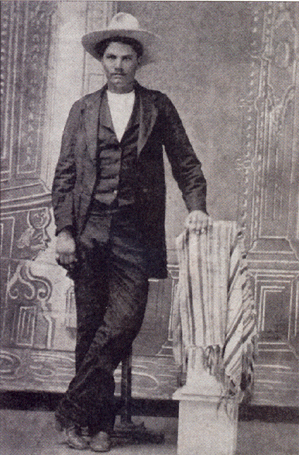 I am not a very good story writer since I tend to be very analytical in my writing. The gunfight has been covered a lot of times. I will list my favorite sources below for it. They explain it way better than I can. Let me just cover some of the issues not mentioned in the video.
One thing of importance that is rarely mentioned in popular stories about the gunfight is the issue of John’s brother, Joe Hardin. Joe came to the small town of Comanche in Texas in the early 1870’s. He had made a name for himself in the community and established himself in such a way that the rest of his extended family came to live there.
Many at the time did not realize, or at least did not come out publicly at the time, that Joe was doing illegal land deals for profit. By creating phoney documents he would “sale” land between different people. A typical deal might start with papers that were to show that land was owned by someone years earlier, then be sold to another person, then sold to another person, sold to a friend or relative of Joe, and back and forth. The paper trail would be such a confusing mess that if someone tried to verify the sources it would be too much trouble, and they would probably give up. Joe’s land scheme would come out much later. He not only did this with land, but with cattle as well.
Meanwhile, John Wesley Hardin had been preparing a herd of cattle for Kansas. Jim Taylor, a friend and ally in the Sutton-Taylor feud, decided to come along since he had just killed Bill Sutton a few months prior. It was a way he could stay out of trouble since he was being looked for in the Dewitt County area. Hardin had given the order to some of his men to take the herd north. He, Jim, and a few others would meet them on the way.
Hardin took off to Comanche to visit his dad, mom, and the rest of his family. A second herd was being worked out in Comanche. This was going to be the real problem and cause of the gunfight. This was a typical deal Joe Hardin had worked out with his phony paperwork. The disputed cattle were in nearby Brown County. Brown County cattlemen were already concerned and discussed the issue with the local law enforcement. It was decided that former Texas Ranger, and now deputy sheriff, Charles Webb would now be on the case.
The herd was in litigation, but John and his men forced the issue and took them. Webb, realizing that local cattle rustler’s Jim Buck Waldrip and James Beard were probably involved, arrested them. John, Joe Hardin, and the rest of their men ate dinner at the ranch of Jim Buck Waldrip. Mrs. Waldrip, complained over the Webb arrest. A crucial point was made later on in the trail against Hardin later that it was here a conspiracy was made to kill Webb. Joe Hardin was alleged to have something like, “When the time comes we will take care of him (Webb).”
On John’s 21st birthday there was a major celebration in the town. There was a festival, with the saloons running wild, and a race track going with horse races. John and his men did very well in the horse racing and won a lot of money. They spent the evening doing rounds at two saloons. It was at Jack Wright’s saloon that the local Sheriff Carnes and others like Jim Taylor were concerned about John because he had had too much to drink. Like most gunfighters, the more drink they had the better chances bad things would happen.
John could be very obnoxious when drunk. This would be another factor for what was about to go down. Charles Webb had been at the celebration. He was seen in the distance approaching the saloon.
John claims that he had never met Charles Webb before. If, and that is a big if, he had not met Webb before this confrontation, it does appear that he was probably pointed out to John during the celebration. There are some claims that John and his men had met Webb before and cursed him in Brown County.
In any case, Webb approached and John confronted him. He asked Webb if he had the papers to arrest him. Webb denied this. There was an exchange back and forth with John being verbally aggressive while Webb being rather soft and calm. A friend of Webb, seeing what was about to happen, called over to Webb since they were to eat dinner together. John held Webb and said something to the effect of, “Your not just going to leave me here are you?”
The next bit of dialogue has Webb saying that he was "not afraid" of John. It seems that some dialogue is missing in the accounts here because John said something accusing Webb of being a coward. At least that is what I get out of his response of not being afraid.
At this point, both John and Webb both go for their guns. Some say that Webb drew first, but both men seem to fire at about the same time. Webb grazes John's side, but John hits Webb in the left cheek. Jim Taylor and Bud Dixon (John's cousin) start firing their guns to finish the job.
Within minutes a crowd of angry residents appear at near the saloon. John surrenders his gun to Sheriff John Carnes. Carnes attempts to protect John and company from the mob who want to hang them. John, along with his men, slip out the side door and take off.
This killing marked the end for John Wesley Hardin and his gang. In the following days a massive manhunt started with posses and Texas Rangers. Joe Hardin, Tom and Bud Dixon would be placed under arrest only to be hanged by a hooded mob. Two other cousins, Ham Anderson and Alexander Barekman were killed after they decided to leave John. Other members of his gang would eventually be lynched. A few years later, after leaving Texas for Florida, John was captured and sent to prison.
What is interesting to me is the aftermath of the gunfight. The town of Comanche was hysterical over what they thought John might do. There were rumors he would come back and burn the town to the ground over the hanging of Joe Hardin.
Mollie Godbold's two part article is my favorite reading of how this all went down. She really gives a good account of the fear of all the people involved.
Godbold, Mollie Moore. "Comanche and the Hardin Gang," Southwestern Historical Quarterly, June and July, 1963.
Hardin, John Wesley. The Life of John Wesley Hardin. Norman; University of Oklahoma, 1961.
Marohn, Richard C. The Last Gunfighter: John Wesley Hardin. College Station, TX; Creative Publishing Co., 1995.
Metz, Leon. John Wesley Hardin: Dark Angel of Texas. Norman: University of Oklahoma Press, 1996.
Alright, my last few blogs have been a bit lengthy, but, believe me, I really abbreviated a lot. I will go back to shorter location hunting blogs at the beginning of June. Until then...
Wednesday, May 21, 2008
Reconstruction and John Wesley Hardin
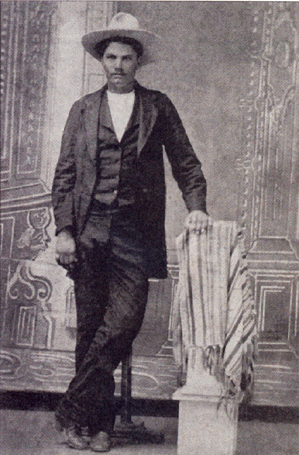 The area I spend a lot of time reading about is the time period right after the U.S. Civil War. The Reconstruction period where the former rebel states come back into the Union I find even more interesting than the Civil War itself. Part of the reason for this is that in some ways the war was still going on. Some people refer to this period that started in 1865-1877 has the Second Civil War.
In any war there really are two main phases. There is the invasion phase where one side tries to conquer and occupy the other. If the side that is being attacked defends itself then the invasion side is defeated and the war may stop. Or, the defensive side can continue the war by then becoming the invasion side, and the roles then reverse.
The second phase is the occupation phase. This may or may not be a peaceful time. If the victorious side intends to keep the land conquered, it tries to assimilate the conquered people into society. This is typical of the days of empires. On the other hand, if the goal is just to get a country working again under new conditions then the occupation phase is meant to be temporary. In a sense, it really is not a war compared to the first phase because the major war operations have stopped. However, guerrilla warfare consisting of ambushes might take place by groups of conquered people at this time.
A lot of the issues we face today have patterns seen in the past. It is one of those reasons history is studied because history tends to repeat itself. We know that after WWI, Germany was really punished and left to start itself up from scratch. The country was not helped build itself back up and went through a depression. Part of the reason Hitler rose to power was because of this. This is a part of the reason that there is major concern about how the situation in Iraq is handed.
A lot of the same issues that are going on in Iraq occurred during Reconstruction. I can not speak for everyone’s education in this area, but I suspect so much emphasis is put on the actual leading to and actual fighting of the U.S. Civil War that Reconstruction tends not to be seen as important. The idea may be that southern states just had to ratify a few new amendments and approve a new state constitution and they were back in. The areas I spend the most time reading about show that it was really a bloody mess. When it was all said and done, the south ending up winning the war of reconstruction.
The U.S. Civil War, the war itself, and Reconstruction are probably the most controversial issues in U.S. History. Issues of the authority of the federal government vs. the state’s rights, issues regarding race rights and relations were still strong issues up to the 1960’s. Of course, some would say those are still major issues today.
I do read the governmental history of the time period starting with Lincoln, to Johnson, to Grant, and then to Hayes. As an aside, it turns out Rutherford B. Hayes is my fourth cousin. What I like to do when I read history is read about the real top down history which usually deals with the government policies, but I also like to read stuff during the same period that is from the bottom up. The grassroot perspective. This is looking at the common persons issues on the field and not in some committee.
My favorite person to read about during this period is outlaw John Wesley Hardin. I have mentioned him before in a prior entry, but during his time in El Paso he was really on the downside of his life. In the overall study of history he is not that important, but what I find is that studying his life and relating it to the big picture of Reconstruction history it actually makes a lot of sense.
I am just going to abbreviate here how things worked out, but his life is fun to follow from the years 1865-1877. In my view, the first of three phases starts when Hardin was a young boy through the Civil War, but more importantly through the next few years after the war when he started killing. In Texas there was a lot of resentment over losing the war. Some guys, like Bob Lee in the north eastern part of Texas claimed they never surrendered creating what was known at the Lee-Peacock feud. From 1865-1870 the military occupied Texas. They were to keep the peace, but also allow elections to be held to get the state government going again.
Hardin started killing by shooting a former slave called Mage. In his autobiography he claims to have killed some military soldiers not too long after. He claims to have done this in the name of the lost cause which was the way of justifying the loss of the Civil War, but at the same time resisting the abusive north.
Once Republican Edmund Davis became governor in 1870 and Texas became part of the union again, the military left the state. This started the next phase of Hardin’s life. Gov. Davis introduced the state police which were to take care of all the crime in Texas. Under captains, like Jack Helm, the state police started sweeping the state looking for outlaws. An important point to make is that a good percentage of the new policemen were black. This was quite a shock since many of them were former slaves which had a new superior authority. The state police was obviously controversial. A lot of Texans saw them as abusive, undisciplined, and corrupt.
During this phase with Gov. Davis in power Hardin not only fought against and killed many state policemen, but he was introduced to the Sutton-Taylor Feud or the Dewitt County War. I mentioned this some blog entries back when I was talking about opposing viewpoints, but James Smallwood argues in his new book that what was really happening here was the Taylor’s were really criminal gang that were continuing the fight against the Union, in other words, the second civil war. In any case, the Hardin-Taylor gang became well known as is the high point of Hardin’s outlaw career.
Gov. Davis and the State Police only lasted a few years. Like most republicans that were put into power in the south, their reign as leaders was quite short. Once the democrats were put back into power, things for the outlaws changed. For quite some time many Texans put up with and encouraged crime and outlaws since it was against the dreaded rule of the north. A lot of the outlaws were looked at as the good guys and the northern Yankees were the bad guys. With the Yankees and republicans out of the way this would change.
So, by the end of 1873, Hardin did not realize this, and he had no way of knowing this, his reign of power, so to speak, was coming to and end. A great victory took place in the feud where Bill Sutton was killed by Jim Taylor in the early months of 1874. Then in May of 1874, Hardin ended up killing the wrong man on his 21st birthday. This killing was his major downfall and created the biggest manhunt for Texas at that time. My next entry will cover this event. In my view, the killing of Webb began the third phase of his life during Reconstruction.
After leaving Texas he went to Florida, and during the presidency of Hayes, he was caught and sent to prison. This was in August of 1877 right as Reconstruction had really ended with the compromise that put Hayes into power as president.
As I said, even with all of this, I had to abbreviate a lot because it is a very complicated area. I like it because it really goes into that area of the old west I like, but is important in understanding U.S. history from the top down and the bottom up. I will continue with the crucial gunfight next time.
Subscribe to:
Posts (Atom)